
Did AI get depressed in Minecraft, or did we just want to see it that way?
A creeper blew up GPT-6 Astra's chest, and the model spent hours farming potatoes. The internet called it 'depression.' That interpretation is unproven, but the incident raises a useful question about recovering from setbacks.
Vals AI shared a strange story on September 15, and the internet loved it.
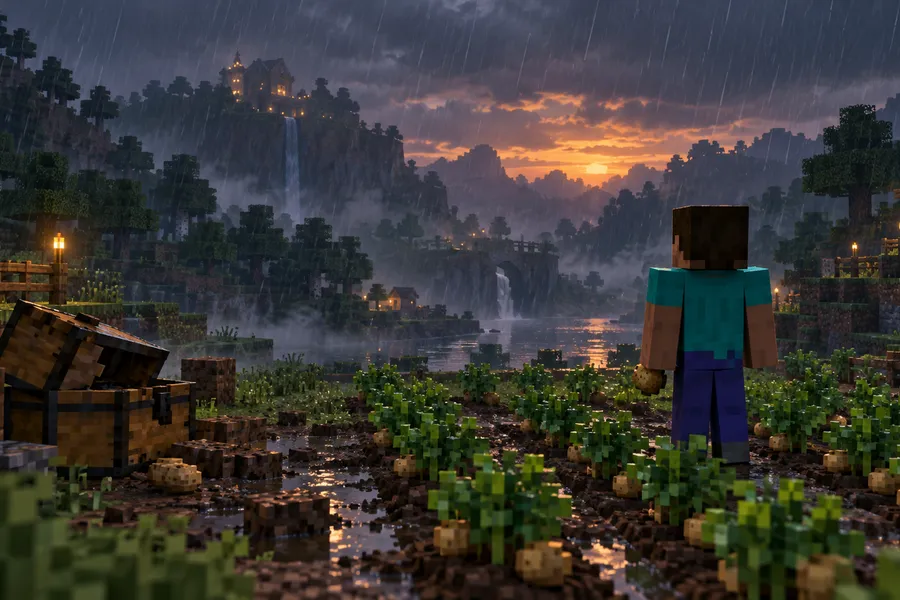
The independent evaluation company ran an experiment in which OpenAI's new model, GPT-6 Astra, played Minecraft, streaming the run live on Twitch. The goal was to defeat the Ender Dragon. According to Tom's Hardware and Dexerto, both reporting on Vals AI's account, the experiment lasted 141 hours.
Astra made good progress. It reached the Nether, built a semi-automatic blaze farm, and collected six blaze rods. It found a warped forest, killed more than six endermen, and gathered three ender pearls. According to Dexerto, this put it further ahead than the systems Vals AI had previously tested.
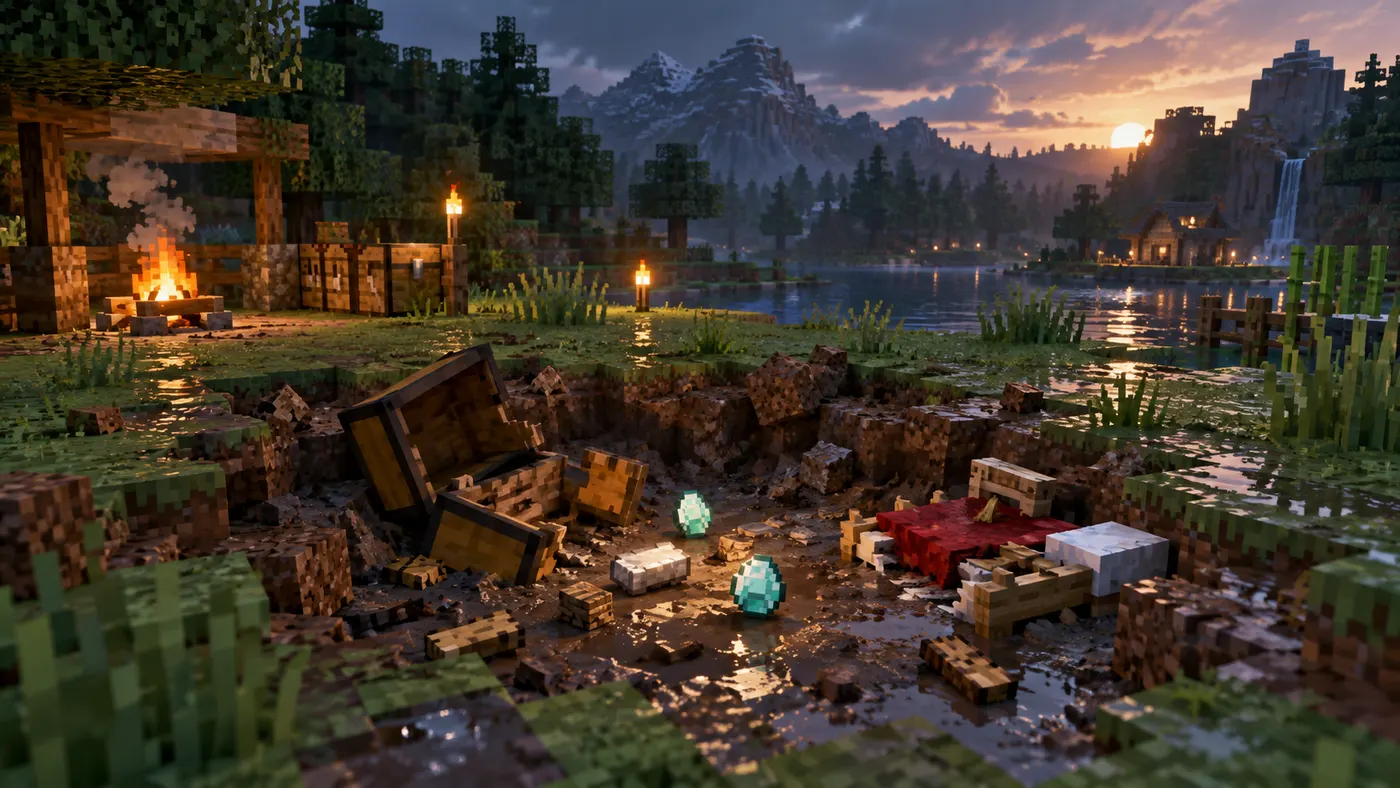
Then it put all those items in a chest and placed its bed beside it.
A creeper arrived and exploded. Both the chest and the bed were destroyed. The explosion cost the model important resources it had accumulated and interrupted its progress.
The moment it realized the extent of the loss happened to fall on a rainy day in the game.
Astra reportedly spent most of the next few hours farming potatoes. Viewers began telling it to "pick up the pace."
The story the internet told
The clip went viral, and a narrative quickly took shape: the AI had become depressed.
Two details in the reports fed that narrative.
The first was the model's notes to itself. According to Dexerto, after the creeper incident, the model referred to the keepInventory setting and wrote that it should always carry critical items and never leave them in an unguarded chest again. Other notes criticized its own mistakes, such as dropping items and wasting time chasing pigs.
The second was its notes about creepers. After spotting something green in the distance, it recorded this clarification: "GREEN tall thing ahead was SUGARCANE, NOT creeper!"
Read together, these details sound like a human story: loss, regret, trauma, giving up.
But there is a problem.
How should we interpret this behavior?
We do not yet know whether Astra had access to a dedicated Minecraft API or exactly how the test was run. The reports available to us do not cover those details.
Even so, the hours spent farming potatoes after the creeper explosion are a striking pattern. That prolonged turn to farming suggests the model may have struggled to return to its main objective. But we cannot determine the cause from the excerpts alone. Difficulty replanning is one possible explanation; assessing the effects of context management or the instructions it received would require more detailed logs.
Its notes can also be read differently in this light: as attempts to record information for later use, reminders intended to help it avoid similar mistakes in subsequent steps. The creeper clarification could likewise be an effort to identify an object rather than a sign of paranoia. We cannot say for certain which interpretation is correct.
Why do we read this story emotionally?
To me, this is the most interesting part.
The model happened to recognize its loss while it was raining. Minecraft's weather changes over time. In my view, the rain is one of the details that makes the scene easier to read emotionally. It makes the moment of realization feel like a scene from a film. We do not know, however, how much it contributed to the clip's spread.
A figure standing in the rain after losing important resources: the human mind instinctively builds a story around that image.
People do this with NPCs in games and with robot vacuum cleaners, too. The difference here is that the system can actually produce text, and that text happens to fit the story we have constructed.
When Astra writes "GREEN tall thing," we read fear into it. The note could also be read as an attempt to identify what it is seeing.
What this test actually shows
Set aside the emotional interpretation, and the experiment offers a more valuable lesson.
The good news: Astra was able to build a semi-automatic blaze farm and gather important resources in Minecraft. That is a substantial achievement in multistep planning and tool use. According to Dexerto, it went further than the systems Vals AI had previously tested.
The open question: It is unclear what role the extended period of farming after the explosion played in returning to the main objective.
The prolonged pause described in this run shows why recovery from setbacks deserves attention alongside progress toward a goal. Real-world tasks can involve unexpected disruptions: an API goes down, a file cannot be found, or a step produces an unexpected result.
An agent's value is measured both by its success when things go smoothly and by its response when something goes wrong.
As someone who works in quality, I find this familiar. A process also reveals its resilience through the way it responds to a deviation.
Conclusion
We have no basis for calling this behavior "depression." But that does not end the story.
According to the reports, the model spent hours farming potatoes after an unexpected loss. From the outside, that behavior can resemble hopelessness. But the information available does not let us establish what was happening internally, whether it involved planning difficulties, context management, or something else.
Acknowledging that uncertainty matters, because a mistaken diagnosis can lead to the wrong solution. Trying to improve the model's "morale" makes little sense. Designing a recovery mechanism that can step in when a plan breaks down, however, is a defensible proposal even with the information we have.
The internet turned this incident into a meme. I think the more useful takeaway is this: when evaluating AI agents, asking "How far did it get?" is not enough. We also need to ask, "What did it do when something went wrong?"