
25,000 Robotaxis Announced — but No Order Has Been Placed, No Money Has Changed Hands, and the Software Is Still Unclear
Lucid and Bolt have announced a partnership targeting at least 25,000 autonomous vehicles across Europe. The number is impressive, but the details are more measured: there is no binding vehicle order, the first model based on the underlying platform has been delayed until 2027, and the provider of the Level 4 driving software has not been disclosed.
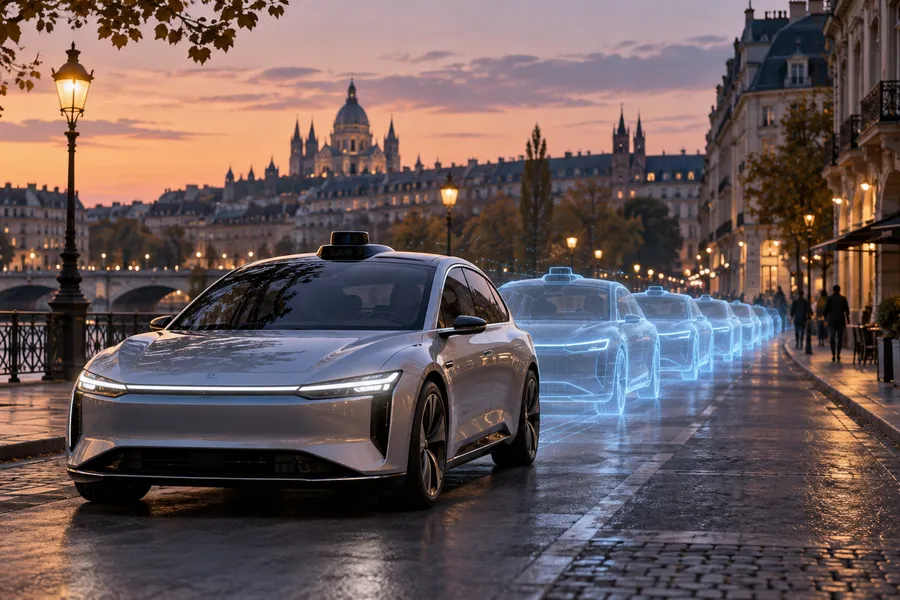
Lucid and Bolt, a major European mobility platform, announced a partnership on September 17 aimed at deploying at least 25,000 autonomous vehicles across European cities.
Bolt's longer-term ambition is even larger: 100,000 vehicles by 2035.
The announcement pushed Lucid shares higher.
But once you get past the headline number, the distinction between what has actually been committed and what is still only a target becomes much more important.
First, the scale: Bolt is not a small player
This is not a partnership between two obscure startups.
Bolt has more than 200 million customers and over 4.5 million drivers, couriers, and other platform partners. It operates in more than 850 cities across over 50 countries.
It is one of the relatively few companies in Europe with the operating footprint to run autonomous ride-hailing at meaningful scale.
The technical partners are substantial as well.
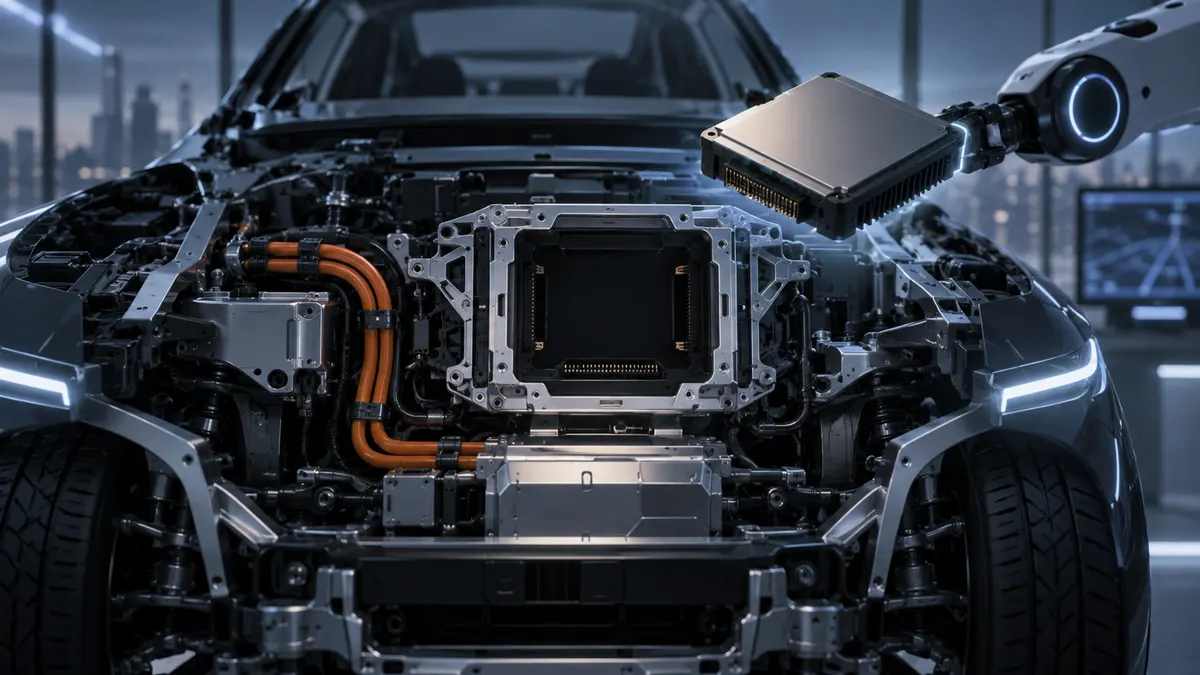
The vehicles are expected to be based on Lucid's upcoming Midsize platform, target SAE Level 4 autonomy, and use NVIDIA's Hyperion architecture.
Bolt Autonomous Driving Solutions will own and operate the fleet, while Lucid's side of the program will involve its newly created Lucid Technologies unit.
The announcement also says the companies will work with unnamed "autonomous driving technology partners."
Bolt CEO Markus Villig captured the Europe-specific challenge well: autonomous driving in Europe requires data, software, vehicles, and operations to work together as a single system built for European roads and regulation.

Now look at what the agreement actually is
At this stage, the announcement is not a binding vehicle order.
It is a strategic partnership built around a deployment target.
Lucid's own wording reflects that distinction: Bolt "aims to deploy at least 25,000 vehicles."
TechCrunch makes the commercial reality even clearer: no money has changed hands, and Bolt has not placed an order.
Financial terms were not disclosed, and there is no publicly announced binding minimum purchase commitment.
Unlike Lucid's Uber deal, Bolt is also not taking an equity stake in Lucid.

The deployment schedule remains unclear as well.
The companies' September 17 announcement did not give a launch date. Lucid CEO Silvio Napoli later said the first vehicles could reach the road as early as 2028.
His stated goal was essentially to move as quickly as possible.
Three major questions remain
The vehicle platform is not in production yet.
The proposed 25,000 vehicles are supposed to use Lucid's Midsize platform.
But in August, Lucid delayed the launch of the first lower-cost vehicle based on that platform from late 2026 to the second half of 2027.
The platform itself was not what was delayed; the launch of its first production model was.
That distinction matters, but the robotaxi program still depends on the platform reaching production maturity.
The final provider of the Level 4 driving software has not been named.
The vehicles are expected to use NVIDIA's Hyperion architecture, but that does not tell us which company will ultimately provide the autonomous-driving software stack for Bolt's fleet.
NVIDIA describes the current Hyperion platform as capable of running its full-stack DRIVE AV software and scaling to Level 4 autonomy.
Lucid and Bolt, however, describe Hyperion as a reference architecture and development platform and do not identify the final autonomous-driving stack that will be used in the program.
That is a meaningful gap.
For comparison, Lucid's Uber robotaxi program is much clearer on this point.
That partnership began in July 2025 with more than 20,000 vehicles and was later expanded to more than 35,000. In that program, the autonomy provider is explicitly identified: Nuro Driver.
The equivalent name in the Bolt deal has not yet been disclosed.
Lucid is under financial pressure.
In June, the company cut roughly 18% of its workforce, or around 1,500 employees.
That followed a separate 12% workforce reduction about four months earlier.
Those percentages should not simply be added together — the workforce base changed between the two rounds — but the broader point remains: Lucid is operating under significant cost pressure.
Whether it can sustain the engineering investment required to support a large autonomous fleet program through 2028 is a separate question from whether the partnership itself sounds promising.
A target and a commitment are not the same thing
None of this means the partnership is meaningless.
Bolt's scale is real.
NVIDIA's technology is real.
And Europe genuinely needs vehicle platforms capable of supporting Level 4 autonomous mobility if robotaxi services are going to move beyond small pilots.
The partnership itself is therefore a meaningful signal that the European robotaxi market is trying to move toward commercial scale.
The narrower point is this:
25,000 is not an order quantity. It is a target.
That distinction matters because the two produce very different consequences.
For anyone who works in quality or manufacturing, the difference is routine.
A target without an owner, delivery date, and acceptance criteria is not yet a plan. It is an intention.
Telling a supplier, "We're thinking about roughly 25,000 units a year," is fundamentally different from issuing a purchase order with delivery dates, quantities, and contractual obligations.
The second lets a supplier plan production.
The first tells them to start thinking about capacity.
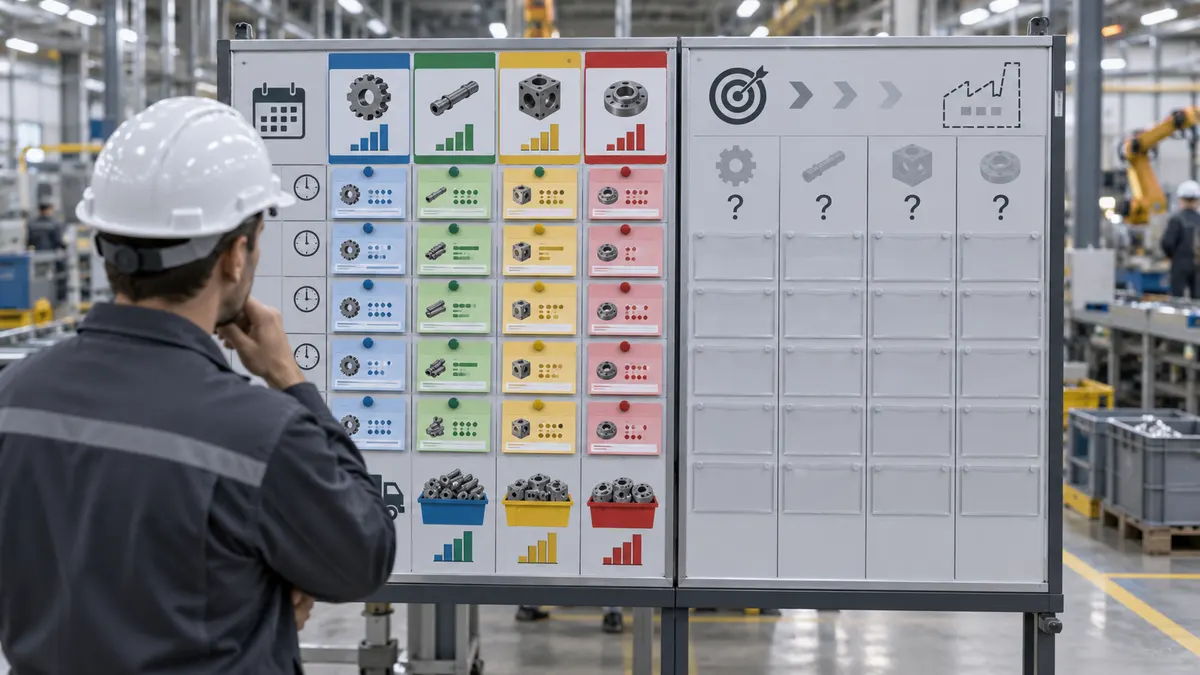
Press releases often describe both in similarly confident language.
The useful questions are much simpler:
Did money change hands?
Was a delivery schedule committed?
Is anyone contractually required to deliver a defined quantity?
In this announcement, the answers are still either no or unclear.
Conclusion
The Lucid–Bolt partnership is still a meaningful signal about where autonomous mobility in Europe may be heading.
Electric-vehicle manufacturers are increasingly positioning themselves not only as consumer carmakers, but also as vehicle-platform suppliers for autonomous fleets.
For Lucid, Bolt represents a second major robotaxi channel alongside Uber.
But the number worth watching is not 25,000.
There are three much more important milestones:
- Will the Midsize platform reach production, and when?
- Who will provide the final Level 4 autonomous-driving software?
- Will the strategic partnership turn into a binding vehicle order?
Until those questions are answered, 25,000 is not a production commitment.
It is a headline target.
If those pieces do fall into place, however, the program could become one of the largest-scale commercial robotaxi deployments in Europe.
TagsNVIDIA